Introduction to the Jonang Tradition
ཇོ་ནང་གཞན་སྟོང་དབུ་མ་ཆེན་པོའི་ལྟ་གྲུབ་ངོ་སྤྲོད།
A systematic exposition of the doctrinal and contemplative foundations of the Jonang tradition: the universal framework of Indian Buddhism, the emergence of Tibet's five spiritual traditions, the definitive Shentong view of Buddha-nature, and the Six-fold Vajrayoga of the Kālacakra completion stage.
Buddhist Fundamentals
Four Noble Truths, Three Marks, and 3 Turnings of the Wheel.
The Five Traditions
Early & Later Propagations: Nyingma, Sakya, Kagyu, Gelug, Jonang.
Genesis of Jonang
11th-century Indian transmission to Dölpopa and Jetsun Tāranātha.
Shentong vs. Rangtong
Self-Nature, Buddha-Nature, and the definitive Two Truths debate.
Kālacakra & Six Yogas
External, Internal, Alternative dimensions & completion stages.
Resilience & Resurgence
Amdo preservation, spiritual continuity & official 5th school recognition.
5-School Comparison
Side-by-side matrix comparing doctrine, meditation & hermeneutics.
Study Pathways
Direct paths into Doctrine, Tantra, Shedra, and Monastery visits.
Introduction to Buddhist Fundamentals
To understand the specialized lineage of Jonang, one must first locate it within the universal framework of Buddhist thought originating in the 6th to 5th centuries BCE with Siddhārtha Gautama, the historical Buddha Shakyamuni.
The Four Noble Truths
བདེན་པ་བཞི།- 1. Duḥkha: The truth of suffering and conditioned unsatisfactoriness.
- 2. Samudaya: The origin of suffering rooted in ignorance and craving.
- 3. Nirodha: The cessation of suffering known as Nirvāṇa.
- 4. Mārga: The path leading to cessation (The Noble Eightfold Path).
The Four Seals of the Dharma
ཆོས་ཀྱི་ཕྱག་རྒྱ་བཞི།- 1. Impermanence (Anitya): All compounded phenomena are in constant flux.
- 2. Suffering (Duḥkha): All contaminated things produce dissatisfaction.
- 3. Selflessness (Anātman): All phenomena are empty of independent self-existence (skandhas).
- 4. Peace (Śānta): Nirvāṇa is peace, the cessation of delusion and suffering.
Dependent Origination
རྟེན་ཅིང་འབྲེལ་བར་འབྱུང་བ།Pratītyasamutpāda is the universal law that all physical and mental phenomena arise only in dependence upon causes and conditions. Nothing exists in isolation; all things are empty of independent self-existence.
The Three Vehicles of Buddhism (Yānas)
As Buddhism flourished across Asia, it adapted into three primary vehicles suited to varied spiritual temperaments: the foundational vehicle of individual liberation (Hīnayāna), the universal path of wisdom and altruistic awakening mind () (Mahāyāna), and the esoteric diamond vehicle of direct transformation (Vajrayāna).
| Vehicle | Spiritual Ideal | Core Method | Philosophical Focus |
|---|---|---|---|
| Theravāda Way of the Elders གནས་བརྟན་སྡེ་པ། | Arhat (Individual Liberation) | Monastic discipline (Vinaya), analytical mindfulness (Vipassanā) | Analysis of the five aggregates (skandhas), overcoming attachment, and extinguishing mental defilements (kleśas). |
| Mahāyāna The Great Vehicle ཐེག་པ་ཆེན་པོ། | Bodhisattva (Universal Liberation) | Cultivation of altruistic awakening mind (Bodhicitta), Six Perfections (Pāramitās) | Emptiness (Śūnyatā) of all phenomena and the indwelling essence of Buddhahood (Tathāgatagarbha) present in all beings. |
| Vajrayāna The Diamond Vehicle གསང་སྔགས་རྡོ་རྗེ་ཐེག་པ། | Siddha / Fully Awakened Buddha | Esoteric empowerments, deity visualization, subtle body yogas (channels, winds, essences) | Direct, swift transmutation of mundane delusion into primordial luminous wisdom (Jñāna) within a single lifetime. |
The Three Turnings of the Wheel of Dharma (Dharmacakrapravartana)
Mahāyāna hermeneutics structures the Buddha’s forty-five-year teaching career into three successive turnings. This three-stage progression serves as the foundational matrix for all Tibetan doctrinal discourse.
The Four Noble Truths
Established personal selflessness (pudgala-nairātmya), the reality of suffering, and ethical monastic discipline.
The Perfection of Wisdom
Established the universal emptiness (Śūnyatā) of all phenomena (dharma-nairātmya) through the Prajñāpāramitā sūtras.
Buddha-Nature (Tathāgatagarbha)
Revealed that ultimate reality is non-dual primordial luminous wisdom (jñāna), an eternal Buddha-nature present in all sentient beings. This turning forms the doctrinal bedrock of the Jonang tradition.
The Landscape of Tibetan Buddhism
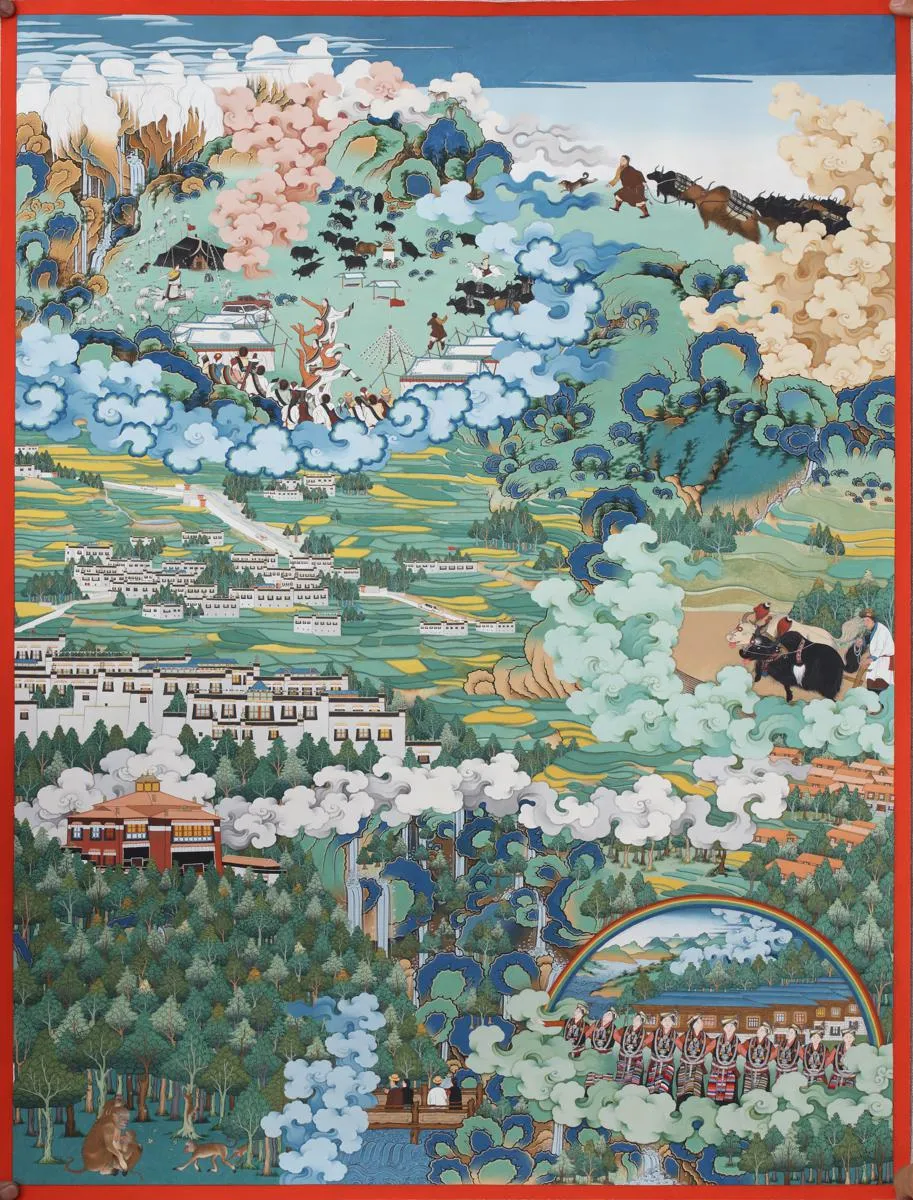
Buddhism entered the Tibetan plateau across two historic epochs: the Early Propagation (Nyingma) in the 8th century, and the Later Propagation (Sarma) from the late 10th century onward, drawing direct Sanskrit translations from Indian monastic universities such as Nālandā and Vikramaśīla.
Nyingma
རྙིང་མ།Formed during the Early Propagation (8th century) under King Trisong Detsen, Guru Padmasambhava, and Śāntarakṣita.
Kagyu
བཀའ་བརྒྱུད།Transmitted from Indian Mahāsiddhas Tilopa and Nāropa to Marpa, Milarepa, and Gampopa in the 11th century.
Sakya
ས་སྐྱ།Founded in 1073 by the Khön family, renowned for scholastic systematization and extensive tantric commentaries.
Gelug
དགེ་ལུགས།Established in the early 15th century by Je Tsongkhapa, establishing major monastic universities across Tibet.
Jonang
ཇོ་ནང་།Consolidated by Kunpang Thukje Tsöndrü and Dölpopa Sherab Gyaltsen in the 13th–14th centuries.
Note on Bön:
Alongside these five Buddhist traditions stands Bön, Tibet's indigenous spiritual tradition, which evolved alongside Tibetan Buddhism while sharing similar monastic, iconographic, and philosophical frameworks.
Genesis and Historical Evolution of the Jonang Tradition
The Jonang lineage represents an unbroken stream of scholarship and contemplative realization descending from 11th-century Indian masters to the present day.
Yumo Mikyö Dorjé
ཡུ་མོ་མི་བསྐྱོད་རྡོ་རྗེ།A direct disciple of the Kashmiri master Somanātha, Yumo Mikyö Dorjé became the first Tibetan yogi to explicitly articulate Tantric Shentong following profound realizations during solitary Kālacakra completion retreat.
Kunpang Thukje Tsöndrü
ཀུན་སྤངས་ཐུགས་རྗེ་བརྩོན་འགྲུས།Synthesized seventeen distinct transmission lines of the Kālacakra completion stage into a single coherent syllabus and founded the central hermitage in the Jomonang Valley of Tsang, from which the lineage derived its name.
Dölpopa Sherab Gyaltsen
དོལ་པོ་པ་ཤེས་རབ་རྒྱལ་མཚན།Revered as The Omniscient Buddha from Dölpo. Built the monumental Jonang Kumbum stupa in 1333 and authored the foundational Shentong treatise, Mountain Dharma: Ocean of Definitive Meaning (Ri chos nges don rgya mtsho).
Jetsun Tāranātha
ཇོ་ནང་རྗེ་བཙུན་ཏཱ་ར་ནཱ་ཐ།16th throne-holder, master historian (author of History of Buddhism in India, 1608), founder of Takten Damchöling monastery, and author of definitive Kālacakra practice manuals used across lineages today.
The Great Jonang Kumbum & The Scholastic Synthesis
In 1333, consecrated the monumental (The Great Stupa of 100,000 Images) in Tsang, establishing the architectural and spiritual capital of Shentong. Two centuries later, the 16th throne-holder codified the complete Kālacakra practice manuals and built Takten Damchöling monastery, producing masterworks that remain central to the lineage.
Doctrinal Core: Shentong vs. Rangtong
At the heart of the Jonang tradition’s distinct identity is its philosophical formulation of emptiness (Śūnyatā), articulated through the dual framework of the Two Truths.
Canonical Definitions: Svabhāva (Self-Nature) and Tathāgatagarbha (Buddha-Nature)
The hermeneutical divergence between Rangtong and Shentong centers upon the precise scope and ontological status of two classical categories: svabhāva (intrinsic reality) and tathāgatagarbha (buddha-nature).
Self-Nature (Svabhāva) / རང་བཞིན།
literally means "own-being" or "self-nature." It refers to the hypothetical quality that would make something exist independently, from its own side, without depending on causes, conditions, parts, or a perceiving mind. A table, for instance, seems solidly real — but it depends on legs, a surface, wood, a carpenter, and a concept in the observer's mind. It has no autonomous essence holding it in existence. All everyday objects, thoughts, emotions, and even the sense of a personal self are like this: they appear, but nothing inside them exists on its own power.
All Buddhist schools agree that ordinary phenomena lack svabhāva. This universal consensus — that tables, persons, feelings, and atoms are not self-sustaining — is the baseline meaning of "emptiness" ().
Buddha-Nature () / བདེ་གཤེགས་སྙིང་པོ།
Tathāgatagarbha literally means "the womb (or seed-essence) of the Thus-Gone One." It refers to whatever it is in every sentient being that makes the attainment of Buddhahood — the complete and irreversible awakening to the nature of reality, characterized by omniscient wisdom, unconditional compassion, and freedom from all suffering — possible. All Mahāyāna schools accept that something like this exists — otherwise the path would be pointless. But the schools disagree sharply about what it is.
The critical question is: is Buddha-nature an unhewn block of marble — raw material with workability but no finished features, requiring years of a sculptor's labor (the path of merit and wisdom) to produce a statue that did not previously exist? Or is it a golden statue already complete beneath a thick layer of dried mud — fully formed and always present, needing only the removal of what covers it? The first image captures the reading; the second, the reading. The disagreement is not about whether Buddha-nature is "real," but about whether the qualities of Buddhahood are newly produced by the path or revealed when adventitious obscurations () are cleared away.

The Two Truths: Rangtong & Shentong in Juxtaposition
How the two major Madhyamaka hermeneutical traditions analyze conventional appearances, the status of ultimate reality, and the nature of Buddha-nature.
Rangtong: "Empty of Self"
Prāsaṅgika Madhyamaka · Gelug & Scholastic Sakya (Nāgārjuna & Candrakīrti)
The Unhewn Block of Marble
Buddha-nature is raw material with workable potential, but has no finished features yet. Like a block of marble, it requires years of sustained effort by a sculptor (accumulating merit and wisdom over eons) to produce a statue that did not previously exist. The enlightened qualities of a Buddha are newly produced by the path.
The Rangtong position holds that all phenomena without exception — including ultimate truth itself — are empty of self-nature (svabhāva). Emptiness is defined as a non-affirming negative (prasajya-pratiṣedha): the sheer absence of inherent existence, full stop. It does not point to any hidden positive ground behind the negation.
On this view, when the Buddha spoke of "Buddha-nature" in the Third Turning sūtras, he was using provisional, pedagogical language () designed to encourage sentient beings — not describing an actually existent luminous entity. Buddha-nature is simply the mere emptiness of the mind, its natural openness to transformation.
That ultimate reality possesses any positive, inherent qualities of its own. Everything — including the deepest truth — is characterized by the bare absence of self-nature. There is nothing "behind" or "beyond" emptiness.
Shentong: "Empty of Other"
Great Madhyamaka (Mahā-Mādhyamaka) · Jonang Lineage (Maitreya & Dölpopa)
The Golden Statue Hidden in Mud
Buddha-nature is already complete with fully formed enlightened qualities (wisdom, bliss, compassion) beneath a thick layer of dried mud (defilements). The spiritual path is entirely subtractive: washing off adventitious stains until what was always present shines forth. The qualities of a Buddha are revealed, not produced.
The Shentong position fully agrees with Rangtong that all conventional phenomena are empty of self-nature. But at the level of ultimate reality, when all adventitious defilements are cleared away, what remains is an unconditioned, primordial luminous awareness () replete with inseparable Buddha-qualities.
This ultimate awareness is "empty of other" (gzhan-stong): devoid of temporary mental obscurations, yet not empty of its own enlightened nature. The Jonang tradition regards the Third Turning sūtras and Maitreya's Ratnagotravibhāga as the definitive, explicit teaching () of the Buddha.
That ultimate reality is not a mere absence but a luminous presence — an unconditioned awareness possessing spontaneous enlightened qualities that have always existed innately within all sentient beings. Awakening does not create Buddhahood; it reveals what was never lost.
"Everything, including the ultimate, is empty of its own nature — there is nothing positive behind the negation."
"Conventional things are empty of their own nature, but ultimate reality is a radiant awareness empty only of the temporary stains that cover it — and that awareness is replete with the qualities of Buddhahood."
Both traditions resolutely reject any personal ego-self (ātman). The Shentong term "True Self" (paramātman) refers strictly to the complete transcendence of conceptual dualism — the indestructible, luminous nature of mind itself.
Philosophical Matrix: Rangtong vs. Shentong
| Dimension | Rangtong | Shentong |
|---|---|---|
| Primary Institutional Home | Gelug (and scholastic branches of Sakya) | Jonang (with Kagyu & Nyingma contemplative variations) |
| Definition of Emptiness | Absolute negation of inherent existence across all phenomena (non-affirming negative). | Negation of adventitious defilements from the ultimate, unconditioned reality. |
| Status of Ultimate Reality | The mere absence of intrinsic nature; unconstructed non-affirming negative. | Non-dual, unconditioned primordial awareness (jñāna) endowed with inseparable enlightened qualities. |
| Scriptural Authority | Second Turning (Prajñāpāramitā Sūtras, Nāgārjuna’s Mūlamadhyamakakārikā). | Third Turning (Tathāgatagarbha Sūtras, Maitreya’s Ratnagotravibhāga / Uttaratantra). |
| Hermeneutical Stance | Second Turning is definitive (nītārtha); Third Turning requires interpretive deconstruction. | Third Turning is definitive (nītārtha); Second Turning is provisional (neyārtha) teaching on conventional reality. |
The Ten Definitive Third Turning Sūtras (Nītārtha)
Within his encyclopedic citations across more than twenty Third Turning sūtras in Mountain Doctrine (prominently featuring the Laṅkāvatāra and Ghanavyūha), Dölpopa Sherab Gyaltsen codified a core pedagogical group of Ten Sūtras of Definitive Meaning (nges don mdo bcu) revealing the unconditioned reality of Buddha-nature.
Reveals the radiant Buddha-nature hidden within all transient defilements like a jewel in rags.
Declares ultimate reality to be eternal (nitya), blissful (sukha), true self (ātman), and pure (śubha).
The Lion’s Roar of Queen Śrīmālā on the ultimate Tathāgatagarbha and the single vehicle (Ekayāna).
Elucidates that enlightenment is not created anew, but uncovered as the primordial nature of reality.
The Great Drum Sutra proclaiming the permanent essence of Buddhahood across all sentient realms.
Expounds direct entry into non-conceptual awareness beyond mental fabrications.
Distinguishes between relative emptiness of self-nature and the ultimate reality endowed with qualities.
The great exposition of the Buddha’s unconditioned primordial compassion.
Details the inconceivable wisdom and spontaneous qualities of the enlightened state.
The Great Cloud Sutra proclaiming the perpetual lifespan and indestructible nature of the Tathāgata.
The Contemplative Engine: Kālacakra Tantra & The Six Vajra Yogas
While Shentong provides the philosophical ground, the Kālacakra Tantra (“Wheel of Time”) serves as the contemplative engine of the Jonang tradition. Jonang is the exclusive guardian of the completion-stage yogas of the Drō lineage.
External Kālacakra
The physical universe, cosmic solar/lunar cycles, planetary movements, calendar mathematics, and elemental forces.
Internal Kālacakra
The subtle body: central channel () flanked by solar and lunar side-channels (), subtle energy-winds (), drops (), and biological rhythms.
Alternative Kālacakra
, meditation upon the tutelary deity (), physical yogic exercises (), inner heat (), and purifying body and mind into the Primordial Buddha (Adibuddha).
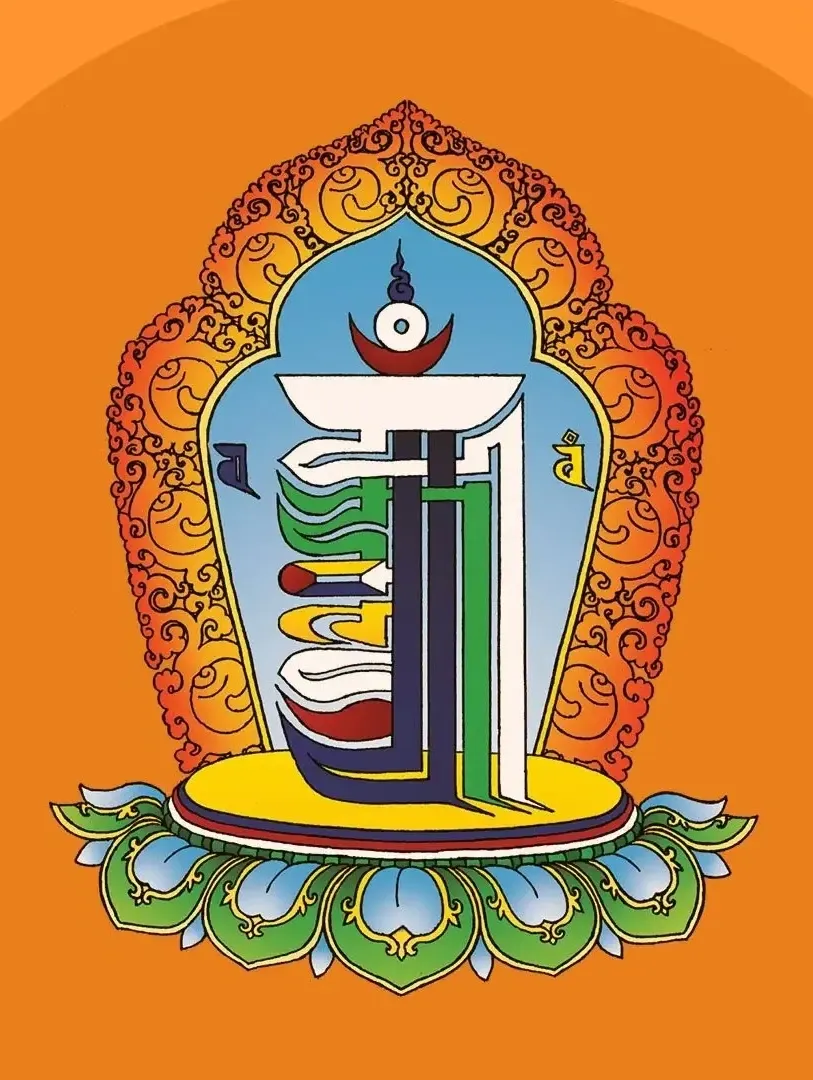
The Six Branches of Completion Stage (Ṣaḍaṅgayoga / Sbyor drug)
The systematic progression practiced in solitary to dissolve karmic energies and actualize the devoid-form body ().
Pratyāhāra (Withdrawal)
Retracting sensory awareness from external stimuli and directing attention into the central channel (avadhūti). In solitary dark retreat, the practitioner directly witnesses the ten visionary signs of empty form (śūnyatā-bimba)—such as smoke, mirages, fireflies, lamp flames, and blazing suns.
Dhyāna (Meditative Concentration)
Stabilizing and integrating the visionary empty forms with non-conceptual insight (prajñā), uniting perceptual clarity with unwavering single-pointed meditative absorption.
Prāṇāyāma (Harnessing Life-Force)
Mastery over subtle energy-winds (prāṇa) via vase-breathing containment (kumbhaka), drawing coarse upper and lower breath winds into the central channel at the navel cakra.
Dhāraṇā (Retention)
Holding the subtle winds and regenerative drops (bindu) bound securely within the central channel, pacifying dualistic thought and generating immutable bliss (akṣarasukha).
Anusmṛti (Recollection)
Igniting the inner heat fire (caṇḍālī / tummo) through the central channel to melt the white bodhicitta drop at the crown cakra. The practitioner directly beholds the luminous, rainbow-like mandala matrix of Kālacakra.
Samādhi (Meditative Stabilization)
The consummate union of unchanging supreme bliss (paramākṣarasukha) and the ultimate devoid-form body (stong-gzugs). Coarse physical aggregates dissolve, actualizing the Primordial Buddha (Adibuddha) state.
Spiritual Resilience and Living Resurgence
Maintained through centuries of political and geographical adversity in the hermitages of Amdo and Kham, the Jonang contemplative and philosophical transmission has received formal recognition among the five major Tibetan spiritual traditions.
The 17th-Century Epoch
During the complex political realignments of 17th-century Central Tibet, Jonang monastics demonstrated unwavering dedication to safeguarding the lineage. While outside observers mistakenly presumed the school had vanished from Tsang, Jonang masters ensured the complete philosophical treatises and esoteric Kālacakra transmissions were preserved intact.
Citadel of Amdo & Rimé Revival
The tradition flourished with uninterrupted spiritual vitality in the mountain sanctuaries of Amdo, centered around the great Dzamthang Tsangwa Monastery. In the 19th century, luminaries of the non-sectarian Rimé movement (Jamgön Kongtrül, Jamyang Khyentse Wangpo) celebrated and championed Jonang Shentong scholarship.
Official Recognition & Flourishing
In September 2011, at the 11th Religious Conference in Dharamshala organized by the CTA's Department of Religion and Culture, H.H. the 14th Dalai Lama and the leadership of all Tibetan spiritual traditions unanimously resolved ecclesiastical recognition of Jonang as the fifth major school of Tibetan Buddhism (while full statutory representation in the Tibetan Parliament-in-Exile remains an ongoing legislative aspiration). Today, the tradition flourishes worldwide across more than 60 monasteries in Tibet and the Himalayas, with Main Jonang Takten Phuntsok Choeling in Sanjauli, Shimla serving as the supreme seat and guardian of the living Kālacakra tradition in exile.
The Mountain Citadel of Dzamthang & Archival Treasures
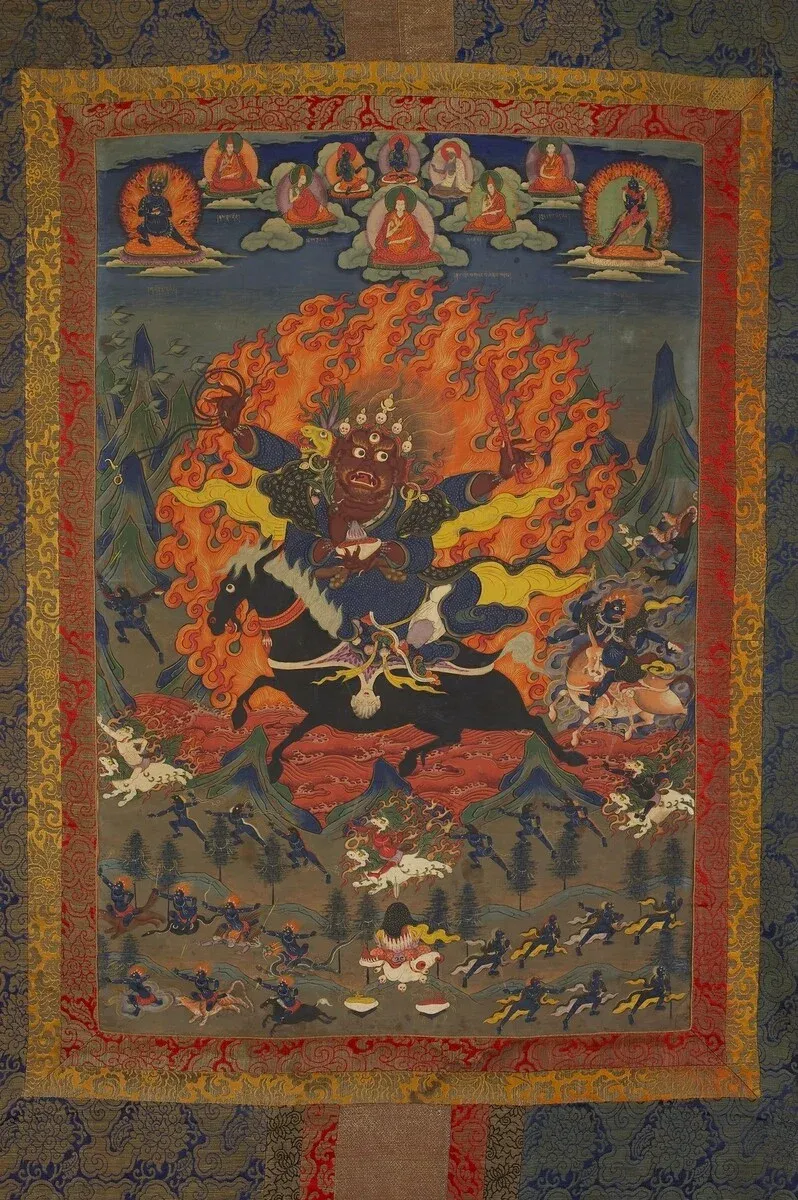
In the isolated river valleys of Amdo Dzamthang, the Jonang monastic community maintained the uninterrupted transmission of the Kālacakra Six Yogas, carving thousands of new xylograph printing blocks and safeguarding centuries-old thangkas and treatises. Today, Dzamthang remains the primary monastic matrix and scriptural depository of the lineage in eastern Tibet.
Comparative Analysis: Jonang & The Tibetan Traditions
A side-by-side comparative summary outlining how Jonang relates to the other four major Tibetan Buddhist traditions across philosophy, view, tantra, and practice lineages.
| Parameter | Jonang ཇོ་ནང་། | Gelug དགེ་ལུགས། | Kagyu བཀའ་བརྒྱུད། | Nyingma རྙིང་མ། | Sakya ས་སྐྱ། |
|---|---|---|---|---|---|
| Philosophical View of Reality | Shentong (Great Madhyamaka): Ultimate reality is empty of adventitious flaws, but replete with eternal Buddha-qualities. | Rangtong (Prāsaṅgika Madhyamaka): Non-implicative negation (med dgag) of inherent existence, strictly preserving conventional efficacy and dependent arising (rten 'byung). | Dual approach: Shentong applied in contemplative meditation (Karma Kagyu); Rangtong used in scholastic study. | Dzogchen Primordial Purity (Ka dag) and Spontaneous Presence (Lhun grub), synthesizing clarity and emptiness. | Inseparability of Clarity and Emptiness (Gsal stong dbyer med); primarily Rangtong dialectics. |
| Primary Tantric Specialization | Kālacakra Tantra (Drō Lineage) & the Six-fold Vajrayoga of the completion stage. | Guhyasamāja, Yamāntaka, Cakrasaṃvara, and Kālacakra (Rwa Lineage). | Cakrasaṃvara, Hevajra, Six Yogas of Nāropa, and Mahāmudrā. | Guhyagarbha Tantra, Eight Herukas (Kāgyé), and Dzogchen Atiyoga. | Hevajra Tantra and the Lamdré (Path and Result) esoteric cycle. |
| Hermeneutical Stance on the 3 Turnings | Third Turning (Tathāgatagarbha) is definitive (nītārtha); Second Turning is provisional (neyārtha). | Second Turning (Prajñāpāramitā) is definitive (nītārtha); Third Turning requires interpretation. | Third Turning prioritized for Buddha-nature experience; Second Turning for conceptual deconstruction. | Third Turning prioritized for luminous nature; Second Turning for freedom from conceptual extremes. | Second Turning prioritized scholastically; non-dual synthesis in meditation. |
| Understanding of Buddha-Nature | An unconditioned, eternal, non-dual reality inherently present within all sentient beings. | A potential or capacity for awakening; a metaphor for the empty, clear-light nature of mind. | The indwelling luminous awareness (rigpa) free from mental fabrications. | The spontaneous presence (lhun grub) of primordial enlightened wisdom. | The natural clarity of mind inseparable from its empty nature. |
| Key Historical Masters | Yumo Mikyö Dorjé, Kunpang-pa, Dölpopa Sherab Gyaltsen, Jetsun Tāranātha. | Je Tsongkhapa, Gyaltsab Je, Khedrup Je, Dalai Lama lineage. | Marpa the Translator, Milarepa, Gampopa, Karmapa lineage. | Guru Padmasambhava, Vimalamitra, Longchenpa, Ju Mipham Rinpoche. | Khön Könchok Gyalpo, Sakya Paṇḍita, Drogön Chögyal Phagpa. |
Canonical Sources and Further Study
Primary resources for advanced study of Jonang philosophical treatises, Kālacakra practice manuals, Shedra curricula, and the monastic community in Shimla.
The Shentong View →
Advanced dialectical hermeneutics and curated academic bibliography.
Kālacakra Practice →
The 3.5-year dark retreat cycle and completion-stage manual.
18-Year Shedra →
Progressive curriculum from Pramāṇa epistemology to the Five Great Treatises.
The Monastery Seat →
History of the Shimla complex, Dalai Lama visits, and liturgical calendar.